
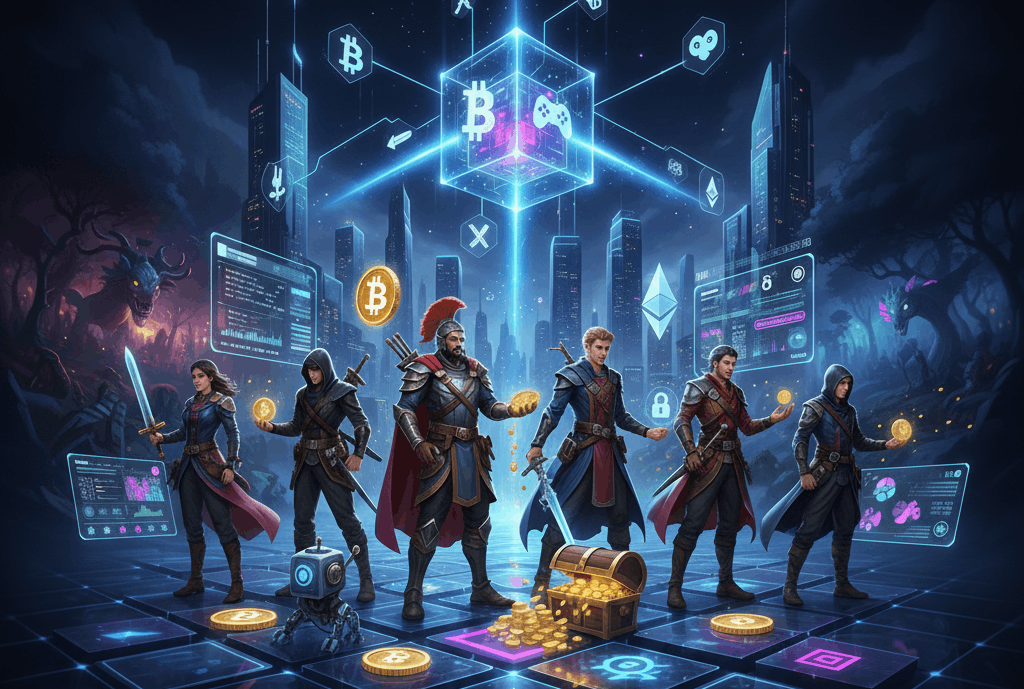
Crypto games represent a major shift in the gaming industry by combining blockchain technology with interactive digital entertainment. Unlike traditional video games, where players spend time and money without true ownership, crypto games allow players to earn, trade, and own digital assets with real-world value. This transformation has introduced entirely new economic systems inside games, redefining how players interact with virtual worlds.
The rise of crypto games is closely linked to the growth of cryptocurrencies, decentralized finance, and non-fungible tokens. As blockchain adoption expands, crypto games are becoming one of the most accessible entry points for users to experience digital ownership and decentralized economies.
What Is a Crypto Game
A crypto game is a blockchain-based video game that integrates cryptocurrency or digital assets into its gameplay. Players can earn tokens, collect NFTs, or trade virtual items that exist on a decentralized blockchain rather than a centralized server.
This structure gives players full control over their in-game assets, allowing them to sell, trade, or transfer items outside the game environment. Ownership is recorded on the blockchain, ensuring transparency and permanence.
How Crypto Games Work
Crypto games operate using blockchain networks and smart contracts. Players typically connect a crypto wallet to the game, which stores tokens and NFTs earned through gameplay.
In-game actions such as completing missions, winning battles, crafting items, or participating in events trigger smart contracts that distribute rewards automatically. These rewards can often be exchanged for other cryptocurrencies or fiat currency through marketplaces.
The Role of Blockchain in Crypto Games
Blockchain technology provides the foundation for crypto games by enabling decentralized ownership, transparent transactions, and trustless interactions. Each asset within the game is tokenized and stored on the blockchain, preventing duplication or manipulation.
This decentralized structure removes the need for centralized control and allows players to retain ownership even if the game developers discontinue the project.
NFTs in Crypto Games
Non-fungible tokens are a core component of many crypto games. NFTs represent unique in-game assets such as characters, skins, weapons, land, or collectibles.
Because NFTs are scarce and verifiable, they introduce real value into gaming ecosystems. Rare or powerful NFTs can command high prices on secondary marketplaces, creating real economic incentives for players.
Popular Types of Crypto Games
Crypto games span a wide range of genres, appealing to different types of players. These games blend traditional gameplay mechanics with blockchain-based rewards.
- Play-to-earn role-playing and strategy games
- Trading card and collectible games
- Virtual world and metaverse-based games
Each category offers unique earning opportunities and gameplay experiences.
Play-to-Earn Model in Crypto Games
The play-to-earn model allows players to generate income through gameplay. Instead of paying to play, users earn rewards based on time, skill, and participation.
This model has gained popularity in regions where crypto earnings can supplement traditional income, turning gaming into a viable economic activity.
Crypto Game Tokens Explained
Most crypto games have native tokens used for rewards, governance, and transactions. These tokens may be earned in-game or purchased on exchanges.
Token value depends on factors such as supply, demand, utility, and player adoption. Understanding tokenomics is essential for long-term participation.
Governance and Community Participation
Many crypto games implement decentralized governance systems. Token holders can vote on updates, economic changes, and future development.
This approach empowers players and aligns incentives between developers and the community.
Benefits of Crypto Games
Crypto games offer several advantages over traditional gaming models by combining entertainment with economic opportunity.
- True ownership of in-game assets
- Ability to earn real-world value
- Transparent and decentralized systems
These benefits attract both gamers and crypto enthusiasts.
Economic Opportunities in Crypto Games
Crypto games create digital economies where players can generate income through trading, crafting, or competitive play. Some users specialize in asset trading rather than gameplay.
Scholarship programs and asset rental models further expand access by allowing players to participate without upfront investment.
Risks and Challenges of Crypto Games
Despite their appeal, crypto games carry risks. Market volatility can impact token values and NFT prices, affecting earnings.
Some projects struggle with sustainability if rewards depend heavily on new player growth rather than genuine demand.
Security Concerns in Crypto Gaming
Crypto games require users to manage wallets and private keys. Poor security practices can result in lost assets due to hacks or phishing attacks.
Using reputable platforms and secure wallets is essential for protecting funds.
Crypto Game Scams and Fraud
The popularity of crypto games has attracted scammers who launch fake projects or exploit players. Common issues include rug pulls, fake NFTs, and malicious smart contracts.
Researching development teams, audits, and community feedback helps reduce exposure to scams.
Legal and Regulatory Considerations
Crypto games operate in a complex regulatory environment. Some jurisdictions treat game earnings as taxable income, while others lack clear rules.
Players should understand local regulations related to cryptocurrency, gaming, and taxation.
Crypto Games and the Metaverse
Many crypto games are evolving into metaverse platforms where players interact in persistent virtual worlds. These environments combine gaming, social interaction, and digital commerce.
Virtual land ownership and user-generated content are becoming central features.
Environmental Impact of Crypto Games
Early crypto games faced criticism for energy consumption due to proof-of-work blockchains. Modern games increasingly use energy-efficient networks.
Sustainability is becoming a key focus for blockchain gaming development.
How to Get Started With Crypto Games
Getting started typically involves setting up a crypto wallet, acquiring supported cryptocurrency, and selecting a reputable game.
Beginners should start with small investments and focus on learning gameplay mechanics before committing significant funds.
Tips for Succeeding in Crypto Games
Success in crypto games requires a balance of skill, strategy, and market awareness. Players who understand both gameplay and economics tend to perform better.
- Research projects before investing time or money
- Diversify across multiple games
- Secure wallets and private keys
The Evolution of Crypto Games
Crypto games are evolving from simple earning-focused models toward gameplay-first experiences. Developers are prioritizing fun, storytelling, and long-term engagement.
This shift aims to attract mainstream gamers while maintaining blockchain benefits.
Future of Crypto Games
The future of crypto games includes improved graphics, mobile optimization, and deeper integration with traditional gaming platforms.
As technology matures, crypto games may become a standard part of the global gaming industry.
Why Crypto Games Matter
Crypto games introduce blockchain technology to millions of users through entertainment. They demonstrate practical use cases for digital ownership and decentralized economies.
This makes crypto games a powerful driver of mainstream crypto adoption.
Conclusion
Crypto games are redefining the relationship between players, developers, and digital assets. By combining gaming with blockchain technology, they create immersive ecosystems where entertainment and economic opportunity coexist.
While challenges remain, the continued growth of crypto games suggests a future where gaming is not only fun but also empowering, transparent, and economically meaningful.