
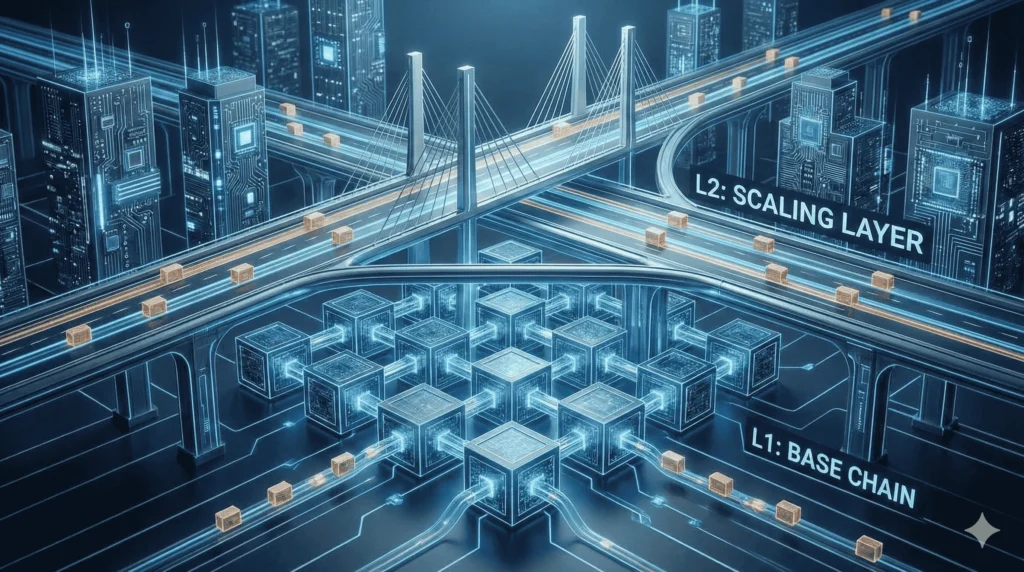
As blockchain technology continues to grow, scalability has become one of the most important challenges in the crypto space. High transaction fees, network congestion, and slow confirmation times can limit usability and adoption. To address these issues, blockchain architecture is commonly divided into two core concepts known as layer 1 and layer 2 crypto. Together, these layers form the foundation of how modern blockchain networks scale while maintaining security and decentralization.
Layer 1 and layer 2 are not competing technologies. Instead, they work together to balance performance, trust, and efficiency across decentralized ecosystems.
What Is Layer 1 Crypto?
Layer 1 crypto refers to the base blockchain network itself. It is responsible for maintaining the distributed ledger, validating transactions, enforcing consensus rules, and securing the network. Every transaction recorded on a blockchain ultimately settles on its layer 1.
Layer 1 blockchains prioritize decentralization and security, which are essential for trustless systems. However, these priorities often come with trade-offs in transaction speed and cost, especially during periods of high demand.
Limitations of Layer 1 Blockchains
As user activity increases, layer 1 networks can become congested. When block space is limited and demand rises, transaction fees increase and confirmation times slow down. This can make small transactions impractical and discourage everyday usage.
Upgrading layer 1 blockchains to improve scalability usually requires protocol changes, which are complex and slow to implement. These challenges have driven the development of complementary scaling solutions.
What Is Layer 2 Crypto?
Layer 2 crypto refers to scaling solutions built on top of layer 1 blockchains. Instead of processing every transaction directly on the base layer, layer 2 systems handle transactions off-chain or in aggregated batches and then submit the final results back to layer 1.
This approach reduces congestion on the main chain while maintaining the security guarantees of the underlying blockchain.
How Layer 1 and Layer 2 Crypto Work Together
Layer 1 and layer 2 crypto form a layered architecture. Layer 1 acts as the secure settlement layer, while layer 2 functions as the execution layer optimized for speed and efficiency.
Transactions occur on layer 2 at lower cost and higher speed, then settle on layer 1 for final verification. This allows users to benefit from fast transactions without sacrificing trust or decentralization.
Key Differences Between Layer 1 and Layer 2 Crypto
The primary role of layer 1 is security, consensus, and decentralization. Layer 2 focuses on scalability, cost reduction, and user experience. Layer 1 upgrades often involve changing block size or consensus mechanisms, while layer 2 improvements rely on transaction batching and cryptographic proofs.
These differences allow both layers to specialize in what they do best, creating a more efficient blockchain ecosystem.
Benefits of Layer 1 and Layer 2 Crypto Systems
By combining layer 1 and layer 2 crypto solutions, blockchain networks can support more users and applications without compromising their core principles. Fees become more affordable, transactions are faster, and developers gain greater flexibility.
This layered approach enables growth across decentralized finance, gaming, digital collectibles, and real-world blockchain use cases.
Security Considerations Across Layers
Security remains a critical concern for both layer 1 and layer 2 crypto systems. Layer 1 relies on decentralized consensus mechanisms to secure the network, while layer 2 solutions use cryptographic verification and economic incentives.
Although layer 2 introduces additional complexity, most modern implementations are designed to inherit security from layer 1, ensuring that user funds remain protected.
User Experience and Adoption
One of the most noticeable advantages of layer 2 is improved user experience. Lower fees and faster transactions make blockchain applications more accessible to everyday users.
As wallets and platforms integrate layer 2 seamlessly, users can interact with blockchain technology without needing to understand the underlying architecture.
The Future of Layer 1 and Layer 2 Crypto
The future of blockchain scalability depends on the continued evolution of both layers. Layer 1 blockchains will focus on long-term security and decentralization, while layer 2 solutions will drive performance and usability.
Rather than replacing one another, layer 1 and layer 2 crypto will continue to evolve together, supporting the next generation of decentralized applications and global adoption.
Final Thoughts on Layer 1 and Layer 2 Crypto
Layer 1 and layer 2 crypto are essential components of modern blockchain architecture. By working together, they solve scalability challenges while preserving the trustless nature of decentralized networks.
Understanding how these layers interact provides valuable insight into the future of blockchain technology and the path toward widespread crypto adoption.